_edited.jpg)
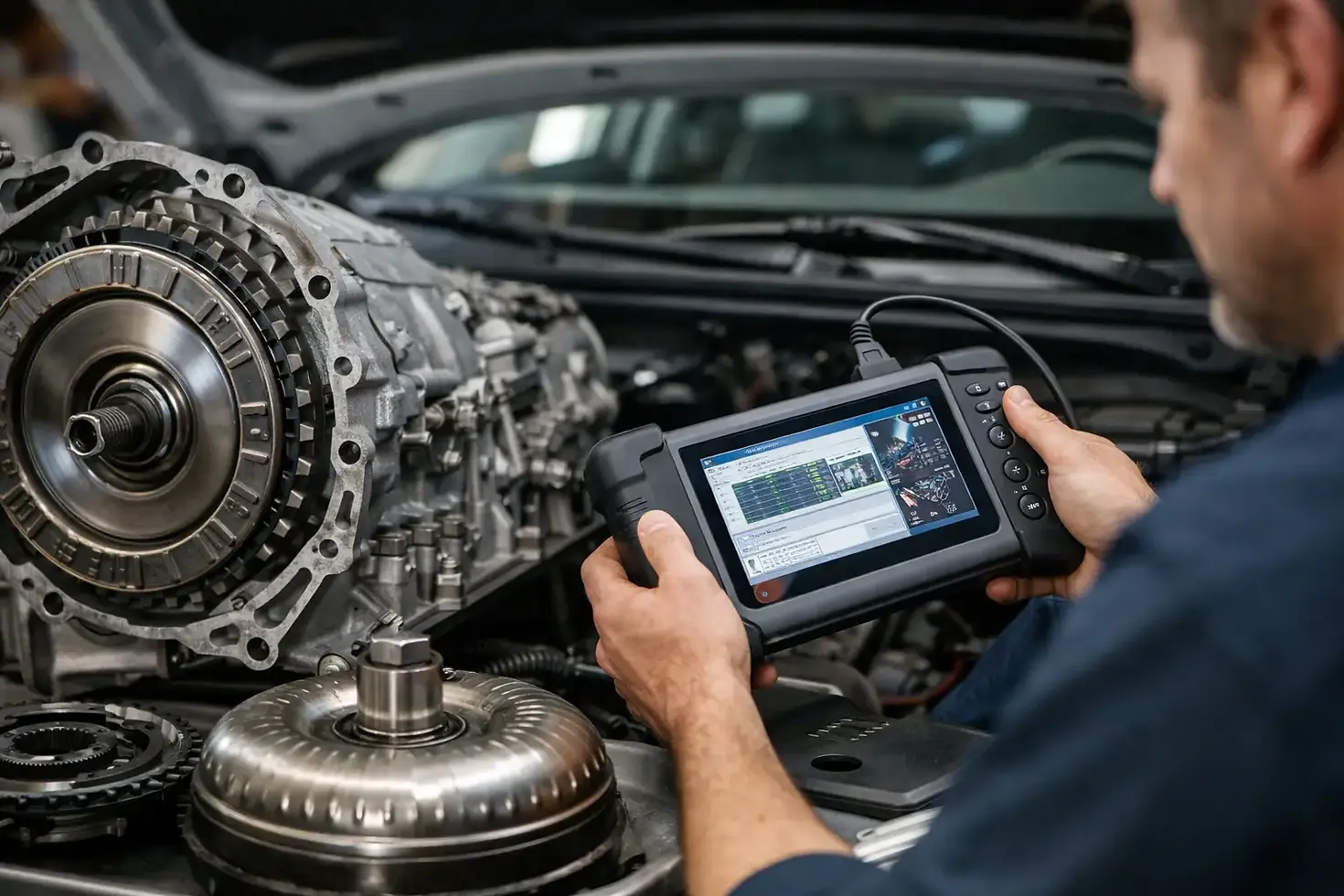
Best Transmission Diagnostic Tool for Real Answers
A check engine light, a hard shift, or a delay going into gear can send people searching for the best transmission diagnostic tool fast. That makes sense. When your vehicle is acting up, you want answers before a small problem turns into a major repair. But with transmission problems, the tool matters less than most people think. What matters most is whether the person using that tool knows how to read the full story your vehicle is telling.
That is where many drivers get led the wrong way. A generic scan tool may pull a code. A more advanced unit may show live data. Neither one, by itself, confirms whether the issue is electrical, hydraulic, mechanical, software-related, or tied to another driveline problem. Transmission diagnosis is not just about plugging something in and waiting for a screen to give a verdict.
What makes the best transmission diagnostic tool?
If you are judging strictly by hardware, the best transmission diagnostic tool is one that can read manufacturer-level data, access transmission control modules, monitor live operating values, and support deeper testing instead of basic code reading. That is the minimum standard for serious transmission work.
But in the real world, the best setup is not one tool. It is a complete diagnostic process. A quality transmission shop uses scan data, road testing, pressure evaluation, experience with common platform failures, and inspection of related systems that can affect shift quality and drivability. That is why a code from a parts-store scanner and a professional diagnosis often lead to very different conclusions.
A transmission does not fail in only one way. Slipping, flare shifts, delayed engagement, shudder, harsh downshifts, overheating, loss of reverse, and intermittent warning lights can overlap. Two vehicles can show the same symptom and need completely different repairs. That is why a machine alone is never the expert.
Why scan tools alone can miss the real problem
A lot of customers come in after someone has already "scanned it" and told them what part they think is bad. Sometimes that guess is right. A lot of times it is not.
Transmission codes point to a circuit, system, or operating condition. They do not always identify the failed component. A shift solenoid code, for example, can involve wiring, internal transmission damage, fluid condition, valve body issues, controller behavior, or a problem that showed up downstream and triggered a related fault. Replacing one part because a screen mentioned it can waste time and money.
This is especially true on newer vehicles where engine performance, ABS inputs, transfer case operation, and electronic controls all affect transmission behavior. If the diagnosis stops at code reading, the real issue may stay hidden. For truck owners, fleet operators, and working drivers, that kind of delay matters. Downtime costs money.
The best transmission diagnostic tool is only as good as the shop using it
This is the part many people do not hear enough. The best transmission diagnostic tool in the hands of an inexperienced tech will still produce an incomplete diagnosis. On the other hand, an experienced transmission specialist can use professional test equipment as part of a much smarter process.
That process usually starts with listening to the customer carefully. When does it act up? Cold or hot? Under load? On the highway? During towing? In reverse? Does the problem happen every time or only once in a while? Those details shape the entire direction of testing.
From there, real diagnosis may involve computer scanning, live data review, physical inspection, fluid evaluation, road testing, and checking whether the issue belongs to the transmission at all. Sometimes a customer expects bad transmission news and the real problem turns out to be somewhere else in the driveline or control system. That is why specialized shops matter.
What drivers should look for instead of just a tool brand
If you are trying to make the right decision, it helps to stop thinking about the tool as the product and start thinking about the diagnosis as the service. That shift in mindset usually leads to better results.
Look for a shop that specializes in transmissions and driveline work rather than general repair only. Look for a team with enough staff and facility capacity to move work through without cutting corners. Look for clear communication, strong warranty coverage, and experience with everything from daily drivers to heavy-duty and commercial applications. Those are stronger signs of a good outcome than any scanner name on the wall.
It also helps to choose a shop that works with extended warranty companies. Transmission repairs can be stressful enough without adding confusion about coverage, approvals, and paperwork. A shop that handles that process regularly can save customers a lot of frustration.
Best transmission diagnostic tool for modern vehicles
On modern vehicles, the best transmission diagnostic tool needs to go far beyond reading generic OBD-II codes. It should access manufacturer-specific transmission data, bi-directional controls where appropriate, adaptive values, temperature readings, gear command information, and related module communication.
That said, even top-tier equipment does not replace pattern knowledge. Experienced transmission specialists, like Barton's, know which makes and models commonly develop converter issues, valve body wear, clutch pack damage, sensor faults, or transfer case-related symptoms that feel like transmission trouble. That kind of knowledge comes from years in the shop, not from a menu screen.
For customers, the practical takeaway is simple. If your vehicle is slipping, banging into gear, hesitating, losing power transfer, or showing warning lights tied to drivability, the best next move is not chasing a gadget. It is getting the vehicle in front of a transmission specialist who can verify what is actually wrong.
Why this matters for Texas drivers, truck owners, and fleets
In North East Texas and across the tri-state area, a lot of people depend on trucks, work vehicles, and higher-mileage daily drivers. These are not convenience vehicles. They are how people get to work, haul equipment, handle family schedules, and keep businesses moving. Barton's offers a quick turn around on diagnosis and repairs, while providing top quality work.
When a transmission starts acting up, waiting too long can turn a manageable repair into a major rebuild. Misdiagnosis can do the same thing. If the wrong part gets replaced or the real cause gets missed, the damage keeps progressing. That is one reason specialized diagnosis matters so much. Accuracy early on can protect both time and money.
For fleet operators, that is even more important. Repeat breakdowns and extended downtime create a chain reaction. One missed route, one delayed service call, or one truck off the road too long can affect revenue and customer commitments. A proper diagnostic process is not just a repair step. It is part of keeping operations dependable. Barton's offers fleet services on gear train/ transmission repairs, along with quick turn arounds to get you back on the road.
What professional transmission diagnosis should give you
A good diagnostic appointment should leave you with more than a code printout. It should give you a clear explanation of what the shop found, what they still need to confirm if further teardown is required, and what your options look like from there.
Sometimes the answer is maintenance-related. Sometimes it is an internal failure that calls for rebuild or replacement. Sometimes the issue extends into the transfer case, clutch system, differential, or another part of the driveline. The value of a true specialist is being able to separate those possibilities instead of guessing.
That is the standard customers should expect from a dedicated transmission shop with a long track record. Barton’s Transmission & Supply LLC has spent 50 years focused on transmission and driveline work, serving Texas, Oklahoma, and Louisiana from its large facility at 1900 S. 3rd Street in Mabank, across from Tractor Supply. With 14 lifts in 17,000 square feet, a large staff, fast turnaround, support for all extended warranty companies, and warranty coverage starting at 3 years or 30,000 miles with options up to 3 years or 100,000 miles, the goal is straightforward - get customers back on the road with dependable work that lasts.
If you are comparing shops, that kind of specialization should carry more weight than any sales pitch about equipment. Good tools are necessary. Experienced diagnosis is what actually protects you from wasted repairs.
Transmission problems rarely get better by being ignored, and they rarely get solved by the first code someone reads off a screen. The right answer usually starts with the right shop, Call Barton's Transmission & Supply today at 903-887-4461


Comments