_edited.jpg)

Custom Transmission Rebuild Process Explained
A work truck that cannot pull a load, a commuter vehicle that will not shift correctly, or a fleet unit sitting in the yard costs more than a repair bill. It costs time. A custom transmission rebuild process is designed to address the actual cause of the failure, not simply replace a few visible parts and hope the vehicle holds up.
For drivers across Northeast Texas and the surrounding tri-state area, a rebuild should be a careful mechanical service backed by experienced technicians, the right components, and a warranty that gives you confidence when you get back on the road. That is especially true for trucks, commercial vehicles, high-mileage daily drivers, and vehicles that work hard in Texas heat.
Why a Custom Rebuild Is Different
A transmission is not one simple part. It is a system of clutch packs, bands, gears, bearings, seals, valves, electrical controls, hydraulic passages, and other components that must work together under pressure. A failure in one area can damage another, and the original cause of the problem may still be present after a shortcut repair.
A custom rebuild is built around the specific vehicle, transmission model, condition of the internal parts, and how the vehicle is used. A family SUV used for school runs has different needs than a pickup used to tow equipment every week. A delivery van or service truck may require a heavier-duty approach because downtime directly affects the business.
The goal is not to sell parts that are not needed. The goal is to rebuild the unit correctly, address worn or damaged components, and make sure the finished transmission is matched to the vehicle's real-world demands. In some cases, a quality remanufactured unit may be the better option. The right recommendation depends on availability, condition, cost, and turnaround needs.
The Custom Transmission Rebuild Process
Professional evaluation comes first
Before a transmission is removed or rebuilt, the vehicle needs a professional evaluation. Transmission performance can be affected by internal wear, electronic controls, fluid flow, cooling concerns, transfer case issues, differential problems, or related drivetrain components. Specialized diagnosis helps separate the real problem from a symptom.
This is where a transmission-focused shop makes a difference. General repair work has its place, but geartrain problems call for technicians who work with these systems every day. A clear evaluation helps prevent unnecessary work and gives the owner a better understanding of the recommended repair.
Removal and complete teardown
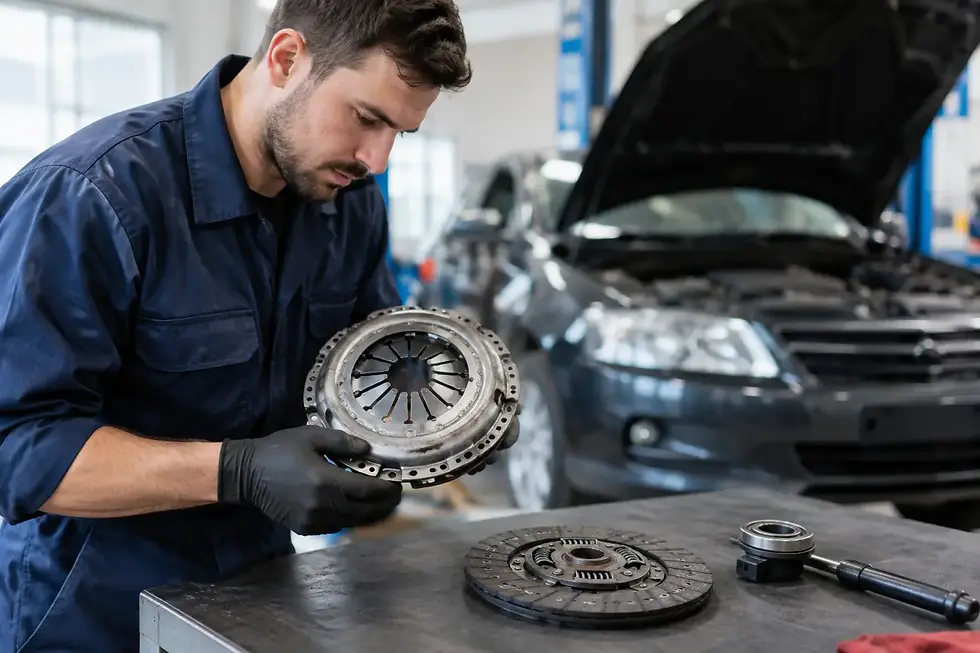
Once rebuilding is the proper path, the transmission is removed and taken apart for inspection. This is not a surface-level look. The internal assembly is disassembled so the technician can inspect friction materials, steels, gears, shafts, bearings, bushings, pumps, valve body components, seals, and other hard parts.
The teardown tells the real story. Burned clutches, damaged gears, contaminated fluid, broken hard parts, and worn hydraulic components can point to the source and extent of the failure. That information matters because replacing only the first failed piece may leave other damaged parts inside the unit.
Cleaning and measuring the components
Parts that are being retained must be thoroughly cleaned and inspected. Reusable hard parts are measured and checked against specifications. Components with excessive wear, heat damage, scoring, cracks, or other concerns are replaced rather than put back into service.
Cleanliness is a major part of rebuild quality. Debris from a failed transmission can circulate through the system and create problems after installation if it is not properly addressed. The cooler and related fluid paths may also need attention to protect the rebuilt unit from contamination.
Selecting quality replacement parts
A rebuild includes replacement wear components, but the final parts package should fit the job. Quality clutches, steels, seals, gaskets, bushings, bearings, filters, and updated components are selected based on the transmission and the repair requirements. If a vehicle sees towing, commercial use, or repeated heavy loads, the technician may recommend upgrades that better suit that service.
There are trade-offs. An upgrade may add cost up front, but it can be worthwhile when the vehicle's workload would quickly wear out a standard component. On the other hand, not every daily driver needs a heavy-duty build. An honest shop explains the difference and helps the owner make a practical decision.
Careful assembly and system correction
Reassembly requires precision. Clearances, clutch pack setup, sealing surfaces, hydraulic operation, and component placement all affect how the transmission performs. Skilled technicians follow the proper specifications for the unit while applying experience gained from known trouble areas in specific models.
A complete repair also considers the systems around the transmission. Depending on the vehicle, that may include the torque converter, cooler, electrical connections, transfer case, driveshaft-related components, or other drivetrain concerns. Correcting those related issues can be just as important as rebuilding the transmission itself.
Installation, verification, and road testing
After assembly, the rebuilt transmission is installed, filled with the correct fluid, and checked for proper operation. The vehicle is verified for shift performance, leaks, operating temperature, and any related control concerns before it is returned to the customer.
This final stage is where workmanship shows. A transmission may look fine on a bench, but it has to perform correctly in the vehicle. Taking the time to verify the finished repair helps protect both the customer and the rebuild.
What Affects Rebuild Time and Cost?
No two rebuilds are exactly alike. The transmission type, extent of internal damage, availability of hard parts, vehicle configuration, and any related drivetrain work can all affect the estimate and turnaround time. Heavy-duty, commercial, four-wheel-drive, and specialty applications may require additional labor or components.
The fastest answer is not always the best answer. Still, a large specialized facility with the staff, equipment, lifts, and parts access to handle transmission work can keep the process moving. Clear communication matters as well. Customers deserve to know what was found, what is recommended, and why the repair is being performed.
Built for Drivers Who Need Their Vehicle Back
Barton's Transmission & Supply LLC has spent 50 years serving drivers from its 17,000-square-foot Mabank facility at 1900 S. 3rd Street, across from Tractor Supply. With 14 lifts, a large staff, and specialized transmission and driveline capability, the shop is equipped for standard vehicles, work trucks, fleet units, heavy-duty applications, transfer cases, differentials, and clutch-related repairs.
The shop works with all extended warranty companies and is a preferred vendor for many of them. For customers paying out of pocket, financing support may be available. Every rebuild decision should come back to value: getting the right repair, minimizing avoidable downtime, and protecting the vehicle after the work is complete.
A long warranty is part of that protection. Standard coverage includes a 3-year/36,000-mile warranty, with options available up to 3 years/100,000 miles on qualifying work. That is a practical advantage for drivers who depend on their vehicle for work, family, travel, or business operations.
Schedule a Specialized Transmission Evaluation
When a vehicle has transmission, clutch, differential, transfer case, or driveline trouble, waiting can turn a contained repair into a larger one. Bring it to a shop that specializes in these systems and has the room, staff, and experience to handle the work properly.
Visit the Mabank facility to discuss your vehicle and ask about current rebuild scheduling, extended warranty assistance, financing options, and available warranty coverage. A dependable repair starts with getting the vehicle in front of the right technicians.


Comments