_edited.jpg)

What Is Transmission Repair, Really?

When a vehicle starts slipping, jerking, hesitating, or refusing to shift the way it should, most drivers ask the same question: what is transmission repair, and what does it actually involve? The short answer is that transmission repair is the professional process of inspecting, diagnosing, servicing, rebuilding, or replacing the parts that control how power moves from your engine to your wheels. It is specialized work, and the right repair depends on the condition of the unit, the type of vehicle, and how far the damage has progressed.
For most people, the transmission is one of those components you do not think about until something feels off. Then it becomes urgent fast. If your truck will not pull right, your commuter car starts shifting hard in traffic, or a work vehicle is losing reliability, the issue affects your day immediately. That is why transmission repair is less about one single fix and more about restoring dependable operation so you can get back on the road with confidence.
What is transmission repair?
Transmission repair is a broad term that covers several levels of service. In some cases, the problem may be isolated to a seal, sensor, clutch component, or internal part that can be repaired without a full rebuild. In other cases, the wear inside the transmission is widespread enough that the unit needs to be removed, disassembled, inspected, and rebuilt with quality replacement parts.
That range matters. A lot of customers hear the word repair and assume it means either a quick minor adjustment or a complete replacement. In reality, it can fall anywhere between those two. The right shop looks at the full driveline picture first, because symptoms that seem like transmission trouble can sometimes involve related systems such as the transfer case, differential, clutch assembly, or other gear train components.
A professional transmission repair process usually starts with a detailed inspection and diagnosis. From there, the next step is based on findings, not guesses. That is especially important with automatic transmissions, standard transmissions, heavy-duty units, and commercial vehicles where downtime costs money and a rushed answer can create bigger problems later.
What transmission repair can include
Transmission repair may involve replacing worn internal components, correcting leaks, resolving shift quality issues, servicing clutch-related failures in manual systems, or rebuilding the unit to restore proper performance. It can also include repair work on connected drivetrain systems if those parts are contributing to the complaint.
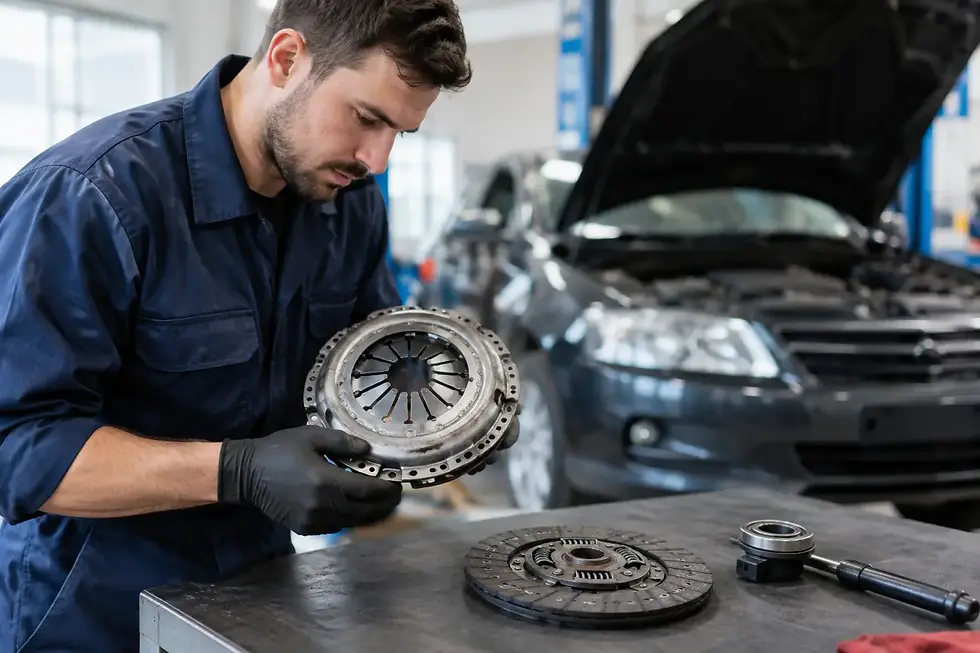
For example, a vehicle that slips between gears may need more than a surface-level fix. A hard shift might point to internal wear, hydraulic issues, electronic control concerns, or damage that developed over time from heat and use. A manual transmission with engagement problems may involve the clutch system, internal gears, synchronizers, or bearings. A four-wheel-drive concern may bring the transfer case into the conversation.
That is why specialized repair matters. Transmission work is not general auto repair. It requires the right experience, the right equipment, and the ability to rebuild for durability rather than just patch a symptom.
Why proper diagnosis matters before any repair
Transmission complaints can feel obvious from the driver seat, but the actual cause is not always obvious. Two vehicles can show similar symptoms and need very different repairs. One may need internal transmission work. Another may have an issue elsewhere in the driveline that affects performance in a similar way.
This is where many vehicle owners lose time and money if they start with assumptions. Replacing parts without a clear diagnosis does not create reliability. It usually just delays the real repair. Professional evaluation helps determine whether the concern is minor, moderate, or severe, and whether repair, rebuild, or replacement makes the most sense.
That decision also depends on how the vehicle is used. A personal vehicle used for commuting may have one repair path. A work truck, fleet unit, or heavy-duty commercial vehicle may need a more durable long-term solution because failure on the job has a higher cost than inconvenience alone.
Repair, rebuild, or replace - what is the difference?
One reason people ask what is transmission repair is because they want to know what they are actually paying for. The answer depends on the condition of the transmission.
A repair usually means addressing a specific problem area while preserving the rest of the unit if it is still in serviceable condition. A rebuild means the transmission is removed and disassembled so worn or damaged parts can be replaced, critical components inspected, and the unit restored to dependable operating condition. Replacement generally refers to installing another transmission, often remanufactured or rebuilt, when that is the better option for the vehicle and situation.
There is no one-size-fits-all answer. Sometimes targeted repair is the smart move. Sometimes a rebuild is the most cost-effective path because it solves the deeper wear issues at the same time. The important part is having a transmission specialist explain the condition of the unit clearly and recommend the option that supports long-term value, not just the fastest short-term exit.
When transmission repair becomes urgent
Transmission problems rarely improve with time. Once a vehicle starts showing signs of trouble, continued driving can increase internal damage and lead to a more expensive repair. That does not mean every issue turns into a full rebuild, but it does mean delay can raise the stakes.
Urgency is even higher for drivers who rely on their vehicle every day. If you commute across North East Texas, use your truck for work, or manage business vehicles that need to stay in service, transmission issues affect more than convenience. They interrupt schedules, income, and customer commitments.
That is why quick turnaround and accurate service matter. Getting a vehicle in front of a dedicated transmission shop early gives you a better chance of resolving the issue before it grows into a larger failure.
What to expect from a transmission specialist
A reputable transmission shop should give you more than a broad guess. You should expect specialized attention, a clear explanation of the repair path, and work built around durability. That includes the ability to handle automatic and standard transmissions, clutch replacement, transfer case repair, differential rebuilds and repairs, and heavy-duty or commercial gear train service when the problem reaches beyond a single component.
It also helps to work with a shop that understands warranty coordination. Extended warranty coverage can be a major factor for vehicle owners facing transmission repairs, and experienced shops know how to work with those providers to help move the process forward.
At Barton’s Transmission & Supply LLC in Mabank, Texas, transmission and driveline work is the core focus, not a sideline. With 50 years in business, a large state-of-the-art facility at 1900 S. 3rd Street across from Tractor Supply, 14 lifts in 17,000 square feet, a large staff, quick turnaround, and service across Texas, Oklahoma, and Louisiana, the goal is straightforward: diagnose the problem correctly, build the repair for durability, and get customers back on the road fast. The shop works with all extended warranty companies and is a preferred vendor for many of them, with warranty coverage that includes a 3 year/30,000 mile standard warranty and options up to 3 year/100,000 miles.
What is transmission repair worth to a vehicle owner?
The real value of transmission repair is not just in replacing damaged parts. It is in restoring trust in your vehicle. You want to know it will shift properly on the way to work, pull when it is supposed to pull, and hold up under the demands you put on it.
A quality repair also protects the rest of the drivetrain. When a transmission is not operating correctly, stress can carry into other systems and create a chain of wear. Addressing the issue with experienced hands can prevent that ripple effect.
There is also the value of knowing when a rebuild is better than repeated temporary fixes. Cheap work often gets expensive later. Durable work, done by specialists, usually costs less over the life of the vehicle because it reduces repeat failures, lost time, and uncertainty.
Choosing the right shop matters
Transmission repair is one of those services where specialization makes a real difference. General automotive knowledge has its place, but transmissions, transfer cases, differentials, clutch systems, and gear train components demand deeper experience. The stakes are higher, the parts are more complex, and the repair quality shows up every time you drive.
If your vehicle is showing signs of transmission trouble, the smartest move is to bring it to a shop that does this work every day. A straightforward answer, a durable repair plan, and warranty-backed service can make the difference between a vehicle that keeps letting you down and one that gets back to doing its job.
When people ask what is transmission repair, the best answer is simple: it is the work that restores one of the most critical systems in your vehicle so you can depend on it again. If your car, truck, fleet vehicle, or work unit is not shifting the way it should, do not wait for the problem to make the decision for you.


Comments