_edited.jpg)

Clutch Replacement Guide for Texas Drivers
A clutch does not usually fail at a convenient time. It starts affecting the morning commute, a work truck, a delivery route, or the vehicle your family depends on. This clutch replacement guide explains what professional clutch service involves, why the complete job matters, and when it is time to bring your vehicle to a drivetrain specialist.
For drivers in Mabank and across Northeast Texas, clutch trouble can feel like an engine or transmission problem because all three systems work together. The right answer is not guessing or replacing one part without looking at the full system. A professional inspection helps determine the condition of the clutch assembly and the related components that can affect how your vehicle shifts, pulls, and drives.
When Clutch Replacement Becomes the Right Call
A manual-transmission clutch is a wear component. Every start from a stop, every shift, towing load, steep grade, and stop-and-go mile puts heat and friction through the assembly. Some clutches last a long time under light highway use. Others wear sooner because the vehicle works harder, carries weight, tows equipment, or sees regular city driving.
Drivers often notice changes in how the vehicle feels before it becomes undriveable. The clutch pedal may feel different, the vehicle may not respond as strongly when power is applied, or shifting may no longer feel normal. A burning odor after hard use, unusual noise when operating the clutch, or difficulty getting the vehicle into gear also deserves attention. These symptoms can come from several related parts, which is why a specialized evaluation is more useful than assuming one specific component is at fault.
Waiting can turn a manageable repair into a larger one. Continued operation with a worn or damaged clutch can add stress to the flywheel, hydraulic components, release system, transmission input area, and other driveline parts. That does not mean every clutch concern requires a complete replacement immediately. It means the vehicle should be checked by technicians who work with manual transmissions and drivetrains every day.
What a Complete Clutch Replacement Includes
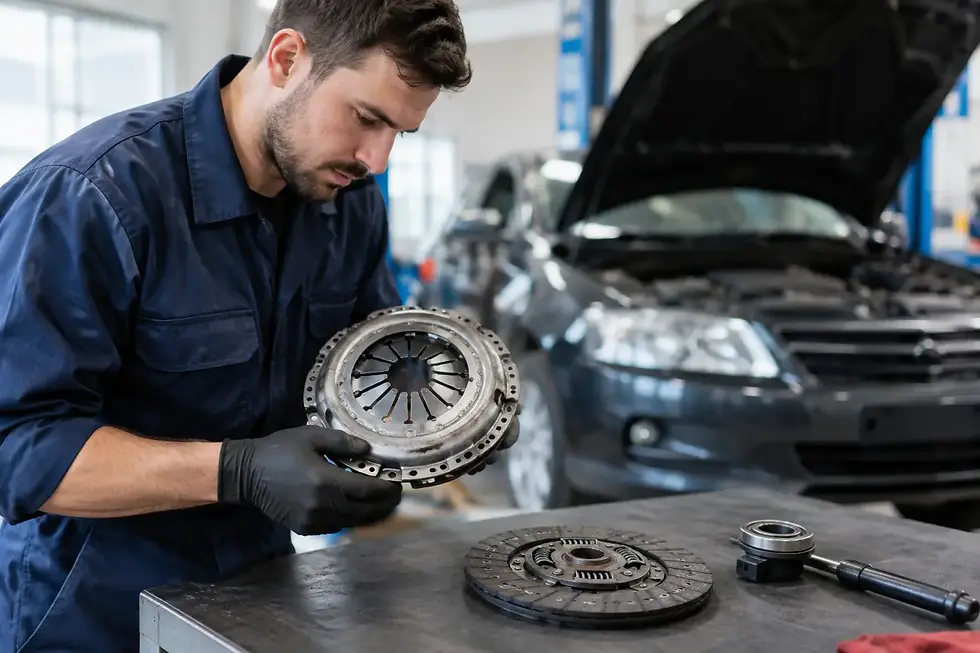
A quality clutch replacement is more than installing a disc. The clutch sits between the engine and transmission, so access requires substantial labor and careful handling of surrounding components. The transmission must be removed, the mating surfaces inspected, and the new parts installed correctly before the vehicle can be tested.
A proper service plan commonly considers the clutch disc, pressure plate, release bearing or slave cylinder, pilot bearing where applicable, flywheel condition, hydraulic operation, mounts, and transmission input components. The exact parts depend on the vehicle. A passenger car, a work pickup, a performance vehicle, and a commercial truck may require very different clutch setups.
The flywheel deserves particular attention. If its surface is worn, heat-spotted, cracked, or otherwise damaged, installing new clutch parts against that surface can shorten the life of the repair or cause poor engagement. Depending on the vehicle and condition, the flywheel may be resurfaced or replaced. That decision should be based on inspection and manufacturer specifications, not a one-size-fits-all approach.
Hydraulic components matter as well. In many newer vehicles, the release bearing and slave cylinder are located inside the transmission bellhousing. If that component fails after a clutch-only repair, much of the same removal labor may be needed again. Replacing related wear components while access is available can be the smarter long-term value, especially for drivers who rely on the vehicle for work.
Why Clutch Service Is Not a Shortcut Repair
There is always a balance between immediate cost and repair durability. Choosing the lowest initial price can be tempting, but a clutch job involves enough labor that cutting corners on parts, preparation, or related components can cost more later. The objective should be a repair that fits the vehicle, the way it is used, and the miles it is expected to cover.
For example, a truck that regularly pulls trailers may need a different solution than a commuter vehicle that spends most of its time on open highways. A fleet vehicle may need a service plan that limits downtime. Older vehicles can have additional wear in mounts, linkage, or hydraulic systems that should be addressed before they affect the new clutch. A knowledgeable shop will explain the condition found and the options available instead of pushing a generic package.
The installation itself also matters. Correct alignment, proper torque procedures, surface preparation, hydraulic bleeding where required, and final road testing all affect how the clutch performs. These are not places for guesswork. The goal is smooth engagement, dependable shifting, and confidence that the vehicle is ready to return to regular use.
Parts Quality Should Match the Job
Not every replacement part is built for the same workload. A low-cost part may appear similar on the shelf but use different friction material, spring design, bearing quality, or pressure characteristics. The right clutch kit should be selected for the vehicle’s application and operating demands.
That is especially true for trucks, commercial vehicles, and drivers who tow. More holding power is not automatically better if it makes the vehicle difficult to operate or does not suit the rest of the drivetrain. The right match is based on the vehicle’s specifications and real-world use. A professional shop can source the needed parts and stand behind the work rather than leaving the customer to sort through incompatible options.
What to Expect From a Professional Clutch Appointment
A good clutch appointment starts with a conversation about what the vehicle is doing and how it is used. That information helps the technician focus the inspection and recommend the repair path that makes sense. Once the work is approved, the shop removes the transmission as needed, inspects the clutch-related components, and communicates any findings that could affect repair quality or cost.
No two clutch replacements are exactly alike. Vehicle design, corrosion, prior repairs, flywheel condition, and availability of parts can affect turnaround time. A shop with the staff, facility space, and parts knowledge to handle drivetrain work is better positioned to keep the job moving without sacrificing workmanship.
Barton’s Transmission & Supply LLC has spent 50 years serving drivers throughout Texas, Oklahoma, and Louisiana with specialized transmission and driveline repair. From its 17,000-square-foot Mabank facility at 1900 S. 3rd Street, across from Tractor Supply, the team has 14 lifts and the capacity to handle standard transmission work, clutch replacement, heavy-duty repairs, fleet needs, transfer cases, differentials, and custom rebuilds.
That specialization matters when a clutch issue may involve more than the clutch itself. Barton’s technicians work on geartrain and transmission-related systems, not just general repair items. Customers receive a clear recommendation built around the vehicle and the work it needs.
Warranty Coverage Adds Real Confidence
Clutch replacement is an investment in the vehicle’s reliability. It should come with workmanship you can trust and clear information about warranty coverage. Barton’s offers a standard 3-year/36,000-mile warranty, with options up to 3 years/100,000 miles on qualifying work. The shop also works with all extended warranty companies and is a preferred vendor for many of them.
For working drivers, fleet operators, and families, warranty coverage is more than a line on an invoice. It provides confidence that the repair was performed with long-term service in mind. Ask about available coverage options when scheduling your clutch service.
If your manual-transmission vehicle is shifting poorly, slipping under load, making clutch-related noise, or simply no longer driving the way it should, do not let the problem interrupt your work or travel plans. Bring it to Barton’s Transmission & Supply in Mabank for specialized clutch and driveline service, dependable repair options, and a team focused on getting you back on the road quickly. Se habla español. A timely professional inspection can protect the rest of the drivetrain and give you a clear path forward.


Comments