_edited.jpg)

Clutch Replacement Versus Clutch Repair Choices
A clutch problem can turn an ordinary drive into a missed workday, a delayed delivery, or a truck that cannot do the job it was bought to do. When considering clutch replacement versus clutch repair, the right answer depends on what has failed, how far the damage has progressed, and whether the rest of the clutch system can be trusted for the miles ahead.
For drivers in Mabank and across Northeast Texas, a proper answer starts with a professional inspection of the complete clutch and driveline system. A clutch is not a single part. It is a working system that transfers engine power to the transmission, and the visible symptom may not tell the full story. Choosing the least expensive option without understanding the cause can lead to repeat repairs, added downtime, and a bigger bill later.
Clutch Replacement Versus Clutch Repair: What Is the Difference?
Clutch repair generally means correcting a specific, limited issue while retaining other components that are still in dependable condition. Depending on the vehicle and the source of the problem, that may involve servicing a related component or correcting an issue affecting clutch operation.
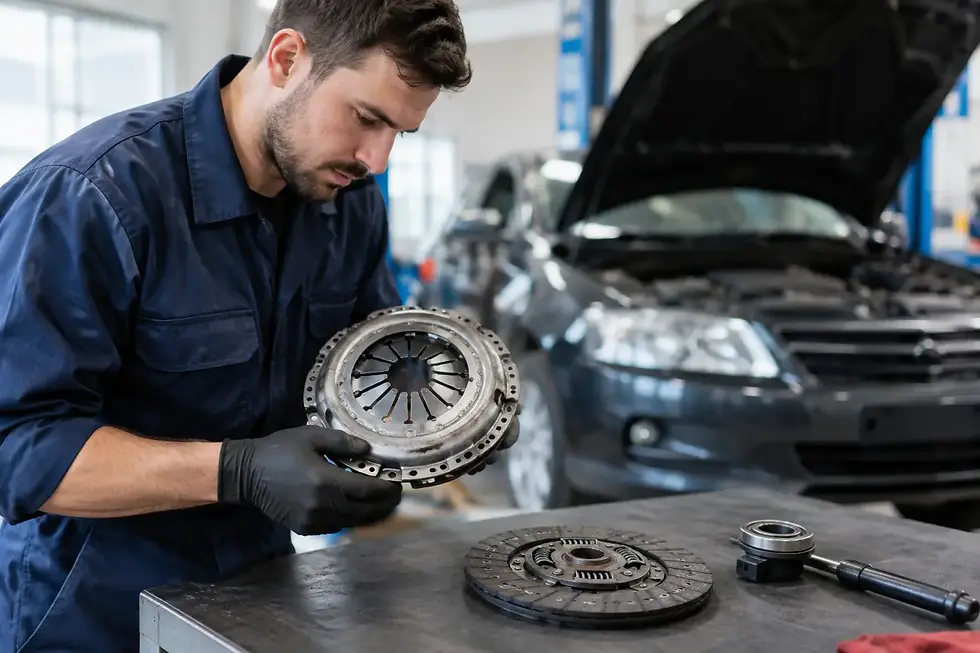
Clutch replacement is more comprehensive. It usually involves replacing the worn clutch components as a matched system and inspecting the surrounding parts that affect engagement, release, and power transfer. Because accessing the clutch requires substantial labor on most vehicles, a quality replacement often makes more sense when several parts show wear or when the vehicle has high mileage, heavy use, or a history of clutch-related trouble.
Neither choice is automatically right for every vehicle. A commuter car with a contained issue may not need the same scope of work as a work truck that pulls equipment, travels long distances, or operates under regular load. The goal is not to sell more work than needed. The goal is to provide a repair that holds up after the vehicle leaves the shop.
When Repair May Be the Better Value
A targeted repair can be the practical choice when the clutch assembly itself is still in serviceable condition and the problem is isolated to a related part or adjustment concern. This is why accurate diagnosis matters. Replacing a complete clutch system when the source of trouble is elsewhere is unnecessary. On the other hand, repairing only one item when the clutch disc, pressure plate, release components, or flywheel condition points to broader wear can create a short-term fix with a short service life.
The vehicle’s use matters just as much as its age. A lightly driven passenger vehicle may have a different wear pattern than a farm truck, contractor vehicle, delivery unit, or fleet vehicle. Stop-and-go driving, towing, hauling, and repeated starts under load place more demand on clutch components. A professional evaluation looks at the vehicle’s operating demands, not just the immediate complaint.
Repair can also be appropriate when a transmission or driveline concern is affecting the way the clutch feels or performs. That is one reason clutch work belongs with a shop that understands manual transmissions, transfer cases, differentials, and geartrain systems as a whole.
When Complete Clutch Replacement Makes More Sense
Complete replacement is often the more dependable route when the clutch has reached the end of its useful life, when multiple components are worn, or when contamination and heat damage have affected the system. It is also commonly recommended when the transmission must already be removed to access the clutch. The labor required to reach these components is significant, so replacing only one worn piece while leaving other aging parts behind can be false economy.
A complete service gives the technician an opportunity to inspect supporting components that can affect clutch life and engagement. If the flywheel needs attention, if release components are worn, or if a leak has damaged friction material, those issues must be addressed as part of a lasting repair. Skipping that step may allow the same problem to return after only a short time on the road.
For truck owners and commercial operators, replacement is often a business decision as much as a mechanical one. Unplanned downtime costs money. A properly scoped clutch replacement can reduce the chance of another interruption when the vehicle needs to be working, towing, hauling, or making deliveries.
Replacement Is Not Just About New Parts
The quality of the work matters as much as the parts installed. A clutch system has to be matched correctly to the vehicle and its use. Correct installation, careful inspection of related components, and attention to the transmission and driveline are what separate a dependable job from a repair that creates another appointment too soon.
This is especially true on modified trucks, high-use work vehicles, and older vehicles where prior repairs or wear in related systems can affect the outcome. A clutch that appears to be the main issue may also reveal concerns with the manual transmission, hydraulic system, transfer case, or differential. Handling those findings correctly protects the investment you are making in the repair.
The Cost Question: Repair Now or Replace Once?
It is understandable to focus on the immediate estimate. Every vehicle owner wants a fair price, and every business owner wants to keep a fleet moving without unnecessary expense. But the better comparison is not simply repair cost versus replacement cost. It is the cost of the repair over the time you expect to keep and use the vehicle.
A limited repair may cost less up front when the issue is truly isolated. A complete replacement can provide better value when labor overlap, component wear, or vehicle use makes a repeat visit likely. The right recommendation should be based on the actual condition of the system, not a one-size-fits-all sales approach.
Ask the shop to explain what they found, what work is recommended, and why one path is expected to deliver better service life. Clear communication should include the scope of the repair, any related concerns, and the warranty coverage available. That gives you a decision based on the vehicle in front of you, not guesswork.
Bring Clutch Problems to a Driveline Specialist
Clutch work is closely connected to transmission and driveline performance. Barton’s Transmission & Supply LLC has spent 50 years serving drivers across Texas, Oklahoma, and Louisiana with specialized transmission, geartrain, differential, transfer case, and clutch service. Our large Mabank facility at 1900 S. 3rd Street, across from Tractor Supply, includes 14 lifts in 17,000 square feet to help keep turnaround moving for cars, trucks, fleet vehicles, and commercial equipment.
Our team evaluates the whole system before recommending clutch repair or replacement. That specialized approach helps identify related issues that a general repair shop may not be equipped to address. Whether your vehicle needs a targeted repair, a complete clutch replacement, or further transmission and driveline service, the work is handled with durability and road-ready reliability in mind.
We work with extended warranty companies and are a preferred vendor for many of them. Qualifying repairs are backed by a standard 3-year/36,000-mile warranty, with warranty options available up to 3 years/100,000 miles. Ask our team about current financing and warranty options when you schedule service. Se habla español.
If your clutch is affecting how your vehicle drives, do not wait for a small concern to become a stranded vehicle or a missed day of work. Call or visit our Mabank shop for a professional evaluation and a clear recommendation built around getting you back on the road with confidence.


Comments