_edited.jpg)

Best Clutch Replacement Timing: When to Act
A clutch rarely fails on a convenient day. It starts with a little extra effort getting moving from a stop, a smell after pulling a trailer, or an engine that revs without the vehicle responding the way it should. Knowing the best clutch replacement timing can help you avoid being stranded, protect related drivetrain parts, and schedule repairs before a small concern becomes a work-stopping problem.
For drivers across Northeast Texas and the surrounding tri-state area, the right time is not based on mileage alone. It depends on how the vehicle is used, the condition of the clutch system, and whether performance has started to change. A work truck, commuter car, farm vehicle, or commercial unit may all need service at different intervals.
Best Clutch Replacement Timing Depends on the Vehicle
There is no single mileage number that applies to every clutch. Some clutches last well beyond 100,000 miles under light highway use. Others wear much sooner when a vehicle regularly handles stop-and-go traffic, heavy payloads, steep grades, towing, or jobsite driving.
A clutch is a wear item. Each time it engages, friction material does its job. Over time, that material becomes thinner and the clutch may no longer transfer engine power as firmly as it should. The goal is not to replace it prematurely. The goal is to have it evaluated when changes in operation suggest the system may be reaching the end of its reliable service life.
Waiting until the vehicle will not move can turn a planned appointment into an emergency. It can also increase the chance of damage to other components that are easier to inspect and address while the transmission is already removed.
The signs that deserve prompt attention
Drivers often notice clutch trouble gradually. A slipping clutch may allow engine RPM to rise while acceleration feels weak, especially under load or when climbing. The engagement point may feel unusually high, shifting may become difficult, or the vehicle may shudder as it starts moving.
A burning odor after towing, hauling, or working the vehicle hard is another concern worth taking seriously. So are new noises when depressing or releasing the clutch pedal. These symptoms do not always mean the same part has failed, which is why a professional inspection matters. The clutch assembly, hydraulic components, release bearing, flywheel, pilot bearing, transmission input area, and related drivetrain parts all need to be considered together.
If the vehicle is still moving but feels different, that is often the best time to schedule service. You have more control over the timing, less risk of a roadside interruption, and a better opportunity to make informed repair decisions.
Why Delaying a Worn Clutch Can Cost More
A clutch replacement requires removing the transmission, so the work should be approached as a complete drivetrain service rather than a quick parts swap. Once a clutch is severely worn or slipping, the heat created by repeated slippage can affect surrounding components. Continued operation may also leave a driver with no dependable way to transfer power to the wheels.
For a business owner with service trucks or delivery vehicles, the cost is not limited to the repair. Lost work time, delayed jobs, towing, and missed appointments can quickly add up. For a family, a vehicle that cannot be counted on can disrupt commutes, school schedules, and daily responsibilities.
Prompt service does not mean replacing parts based on a guess. It means bringing the vehicle to a drivetrain specialist when the warning signs begin. A proper evaluation identifies the condition of the full system and helps determine whether clutch replacement is the right next step.
Towing and heavy-duty use change the schedule
Truck owners should be especially mindful of clutch performance. Towing equipment, hauling materials, pulling trailers, and operating in rural or jobsite conditions place more demand on the clutch than normal commuting. The same applies to commercial vehicles that make frequent stops, carry loads, or spend long hours in service.
That added demand does not automatically mean there is a problem. It does mean that changes in engagement, shifting, power delivery, or odor should be addressed early. A clutch that seems acceptable while empty may slip once a trailer is connected or a load is added.
Heavy-duty and commercial applications also need the right replacement components for the job. The best choice for a light-duty commuter is not always the right choice for a truck that earns its keep. Matching quality parts and workmanship to the vehicle's real use is a major part of a durable repair.
What a Professional Clutch Service Should Address
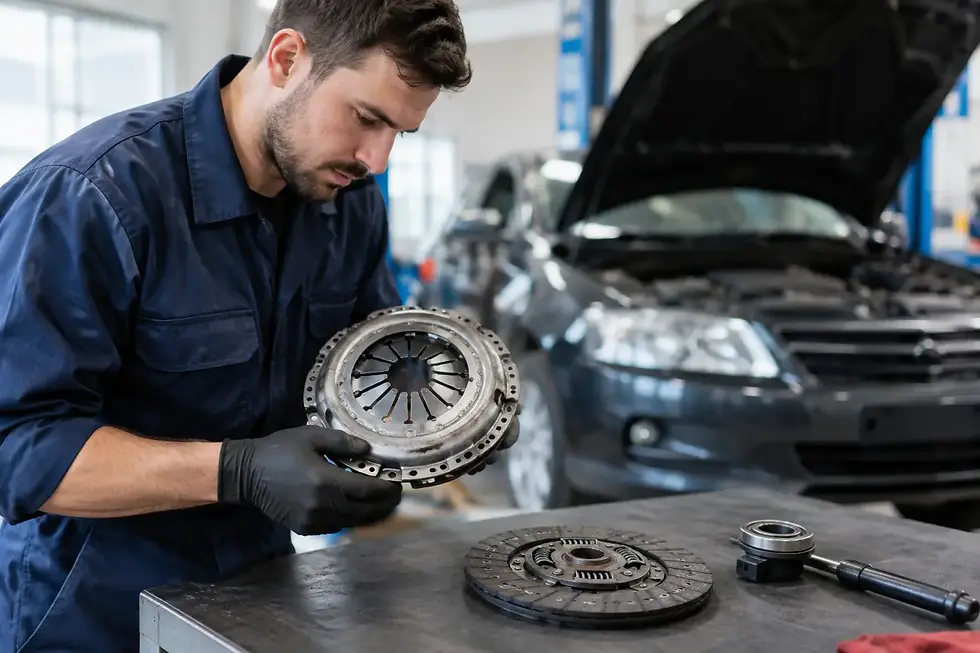
A quality clutch replacement is more than installing a new disc. The clutch assembly works with several connected parts, and the transmission has to come out to access them. That is the time to inspect the components that affect smooth engagement, dependable shifting, and long-term performance.
Depending on the vehicle and the condition found, service may involve the clutch disc, pressure plate, release bearing, pilot bearing, flywheel condition, clutch hydraulics, and related seals. The exact scope should be based on the vehicle's needs, not a one-size-fits-all package.
This matters because cutting corners can lead to repeat labor. Reusing a questionable part simply because it is nearby can create another issue after the vehicle is back on the road. A dependable repair focuses on what will support the new clutch and reduce the chance of returning for the same job.
For standard transmission vehicles, accurate installation and adjustment are equally important. The clutch needs to release and engage correctly so the driver has predictable control and the transmission can shift as designed. Experienced drivetrain technicians understand how the transmission, clutch, transfer case, driveshaft, and differential can affect the overall driving experience.
Plan the Repair Before You Lose Mobility
The best time to replace a clutch is usually before it reaches the point of complete failure. If your vehicle is showing signs of slipping, shuddering, difficult shifting, a changing pedal feel, or a burning smell under load, plan for a professional evaluation soon. Do not wait for a trip, a loaded trailer, or a busy workday to find out the clutch has no service life left.
Scheduling early can also help reduce pressure around the repair. You can arrange transportation, coordinate fleet downtime, and make decisions without the urgency that comes with a disabled vehicle. For customers who depend on their truck or car every day, that planning makes a real difference.
Barton's Transmission & Supply LLC has served drivers for 50 years from its 17,000-square-foot facility at 1900 S. 3rd Street in Mabank, across from Tractor Supply. With 14 lifts, a large staff, and specialized experience in clutches, manual transmissions, transfer cases, differentials, custom rebuilds, and heavy-duty drivetrain work, the team is built for efficient, professional service. The shop serves Texas, Oklahoma, and Louisiana drivers, works with all extended warranty companies, and is a preferred vendor for many. Eligible repairs are backed by a standard 3-year/36,000-mile warranty, with warranty options up to 3 years/100,000 miles.
If a clutch concern has started to change the way your vehicle drives, schedule an evaluation while you can still choose the timing. A properly planned repair is one more way to keep your vehicle ready for the road, the job, and the people counting on you.

Comments