_edited.jpg)

Geartrain Diagnosis for Trucks That Protects Uptime
A truck that starts making noise under load, fights a shift, or develops a vibration is not just an inconvenience. It can cost a workday, delay a delivery, or leave a family without dependable transportation. Professional geartrain diagnosis for trucks finds the actual cause before a smaller driveline concern becomes a major transmission, differential, transfer case, or clutch repair.
Truck drivetrains are built to work hard, but hard work also puts stress on the parts that transfer power from the engine to the wheels. A problem that seems to come from the transmission may originate in a differential. A shifting complaint may involve clutch operation, internal transmission wear, or a transfer case concern. The right repair starts with knowing which system is responsible.
Why Truck Geartrain Problems Need Specialized Diagnosis
A truck's geartrain is a connected system. The transmission, clutch or torque converter, driveshaft, universal joints, transfer case, differentials, axle assemblies, and related electronic controls all affect how power reaches the road. When one component begins to wear or fail, the symptoms can travel through the vehicle.
That is why replacing a part based on a noise alone is a costly gamble. A whine on acceleration, for example, can have more than one source. A delay going into gear can be caused by internal transmission issues, fluid pressure concerns, control problems, or worn mechanical components. A qualified diagnosis separates the source from the symptom.
For working trucks, this matters even more. Hauling equipment, pulling trailers, carrying tools, operating in stop-and-go traffic, and covering long highway miles place demands on the drivetrain that a light-duty commuter may never see. The repair needs to match the truck's use, not just get it moving again for a few days.
Signs That Call for Geartrain Diagnosis for Trucks
Truck owners are usually the first to notice that something has changed. The concern may be subtle at first, but the pattern matters. Pay attention to new sounds, changes in shifting behavior, vibration, leaks, or a truck that no longer pulls or responds as it should.
Common reasons to schedule professional service include a humming, whining, grinding, or clunking sound; hard shifts or slipping; trouble engaging four-wheel drive; vibration that changes with speed or load; a burning smell; fluid leaks; or a warning light connected to the powertrain. A clutch pedal that feels different, a manual transmission that resists gear engagement, or a truck that pops out of gear also deserves prompt attention.
These signs do not automatically mean a full transmission replacement is needed. In some cases, the issue may be isolated to a repairable component, a differential concern, a transfer case problem, or a clutch system. In other cases, continued driving can spread damage through the geartrain. The value of a professional inspection is clarity before the repair decision is made.
What a Professional Truck Driveline Evaluation Looks At
A proper evaluation is more than connecting a scan tool and reading a code. Electronic information can be useful, but it is only one part of the picture. Experienced technicians consider the truck's symptoms, operating conditions, service history, drivetrain configuration, and the relationship between mechanical and electronic systems.
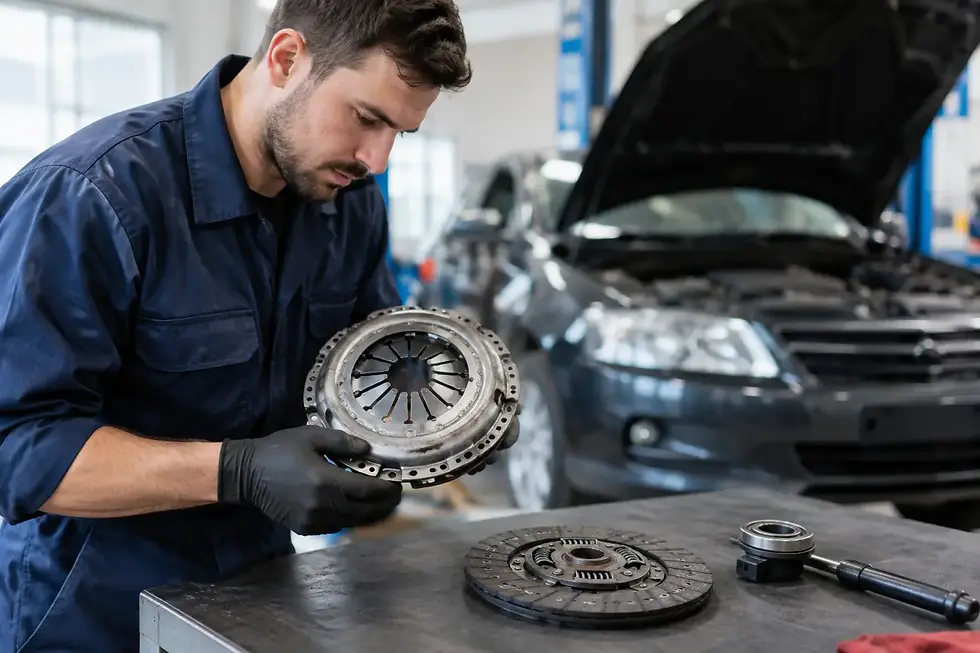
The goal is to identify where the failure began and how far it has progressed. That may involve evaluating transmission operation, checking driveline and differential condition, assessing transfer case function, and determining whether clutch-related components are contributing to the concern. The truck's engine type, transmission type, two-wheel-drive or four-wheel-drive setup, towing history, and commercial use can all affect what the technician finds.
This approach helps prevent two common problems: repairing only the symptom or approving a larger repair than the truck truly needs. A thorough diagnosis gives the owner a clearer explanation of the condition, the recommended repair path, and the factors that affect durability.
The Difference Between a Repair and a Lasting Solution
Some geartrain failures are straightforward. Others reveal secondary damage after the unit is opened and inspected. That is especially true when a truck has operated for a period of time with contaminated fluid, excessive heat, a damaged bearing, worn gears, or an internal pressure issue.
A lasting repair addresses the components that caused the breakdown, not only the part that finally made the truck undriveable. When rebuilding is the right option, the quality of parts, careful inspection, correct setup, and technician experience all affect how the unit performs after installation.
There is also a practical trade-off between repair options. A limited repair can make sense when the damage is contained and the remaining components are in good condition. A complete custom rebuild may be the better value for a truck with significant internal wear, heavy towing demands, or a history of repeated trouble. The best choice depends on the actual condition of the truck and how it needs to perform after it leaves the shop.
Keep Fleet and Work Trucks From Losing More Time
For a business owner, a truck down for drivetrain work can affect more than one vehicle. It can interrupt job schedules, burden other drivers, and put pressure on customer commitments. Fleet geartrain service should focus on accurate answers, dependable workmanship, and turnaround that respects the cost of downtime.
Regular driveline and transmission maintenance can also help identify concerns before they become a roadside problem. Service needs vary by truck, workload, mileage, towing frequency, and operating environment. A pickup that occasionally pulls a boat has different needs than a service truck, delivery vehicle, farm truck, or commercial unit working every day.
When a concern does appear, delaying professional attention can increase the repair scope. A truck that still drives is not necessarily a truck that should keep working under load. Bringing it in while the problem is being noticed can protect other parts of the drivetrain and provide more repair options.
Specialized Service for Truck Owners Across the Tri-State Area
Barton's Transmission & Supply LLC has spent 50 years serving truck owners and fleets across Northeast Texas, Oklahoma, and Louisiana with specialized transmission, driveline, clutch, transfer case, and differential work. Located at 1900 S. 3rd Street in Mabank, across from Tractor Supply, the 17,000-square-foot facility includes 14 lifts and a large staff equipped to handle demanding truck repairs with a quick turnaround.
Whether the truck needs a targeted repair, a custom transmission rebuild, a heavy-duty or commercial rebuild, differential service, transfer case repair, clutch replacement, or related parts, the focus is on work that holds up. Customers can also ask about parts availability for repair projects, financing support, and extended warranty coordination. The shop works with all extended warranty companies and is a preferred vendor for many.
Every repair decision should come with confidence, not guesswork. Barton's standard warranty is 3 years or 36,000 miles, with coverage options available up to 3 years or 100,000 miles. That is real peace of mind for drivers who depend on their truck for work, travel, and everyday life.
If your truck is showing a new driveline, shifting, clutch, transfer case, or differential concern, schedule a professional evaluation before the next load or long trip. Clear answers and durable repairs are the best way to get back on the road with confidence.


Comments