_edited.jpg)

How Rebuilders Restore Shift Performance
A transmission that hesitates, bangs into gear, slips under load, or takes too long to respond can make every drive uncertain. Understanding how rebuilders restore shift performance helps explain why a quality rebuild is more than replacing a few worn parts. The work is about finding the condition that caused the shift problem, rebuilding the unit to proper specifications, and verifying that it performs correctly before it goes back on the road.
For drivers across Northeast Texas, Oklahoma, and Louisiana, that difference matters. A car, truck, work van, or fleet vehicle has to start, pull, shift, and arrive when it is supposed to. A professional rebuild is designed to restore that confidence with durable workmanship, not a temporary patch.
Why Shift Quality Depends on the Whole Transmission
Shift performance is the result of several systems working together. In an automatic transmission, internal clutch packs, bands where applicable, hydraulic circuits, valve body components, solenoids, seals, hard parts, fluid pressure, and electronic controls all affect when and how a gear change occurs. In a standard transmission, gears, synchronizers, bearings, shafts, clutch components, and linkage-related concerns can influence shift feel and drivability.
That is why a worn or damaged transmission may not have one simple cause. A delayed shift can come from internal leakage, worn friction materials, a valve body concern, an electronic control issue, or damage that has affected more than one component. Harsh shifting may involve pressure control, sticking valves, worn internal parts, or an issue outside the transmission that must be considered during professional diagnosis.
A rebuilder's job is to look beyond the symptom. Replacing only the obvious failed part can leave the original cause in place. A proper rebuild addresses the transmission as a working assembly, with attention to the parts and systems that determine shift timing, holding power, and long-term reliability.
How Rebuilders Restore Shift Performance Step by Step
Professional evaluation comes first
Before rebuilding begins, an experienced transmission shop evaluates the vehicle and the condition of the unit. The concern reported by the driver matters, whether it is slipping on the highway, refusing to engage quickly, shifting hard when warm, or acting up while towing or hauling. Vehicle application matters too. A half-ton pickup used for weekend driving faces different demands than a commercial truck, a service van, or a fleet vehicle running daily routes.
The evaluation helps determine whether rebuilding is the appropriate repair and identifies related concerns that could affect the result. This is especially valuable on late-model vehicles, where mechanical, hydraulic, and electronic systems work closely together. The goal is not to guess at a repair. It is to build a clear repair plan based on the vehicle's actual condition.
Complete teardown reveals the real condition
Once a rebuild is authorized, the transmission is removed and disassembled for inspection. This is where hidden wear becomes visible. Friction material may be burned or worn thin. Seals can become hard and lose their ability to hold pressure. Bushings, bearings, thrust surfaces, gears, drums, shafts, pumps, and other hard parts may show damage that cannot be fully confirmed while the transmission is still assembled.
A quality rebuilder does not treat every core the same. Some units need standard wear items along with updated components. Others require replacement of damaged hard parts, repair of the valve body, replacement of a torque converter, or attention to a transfer case, differential, or clutch-related issue depending on the vehicle. The correct scope depends on what the inspection shows.
This detailed process is one reason rebuild quality can vary from shop to shop. Reusing questionable parts may lower an immediate price, but it can also shorten the life of the repair. Durable rebuild work requires decisions based on condition and application, not shortcuts.
Quality replacement parts restore holding power
Many shift complaints begin when internal friction elements can no longer apply and hold as designed. During a rebuild, worn clutch packs, steels, seals, gaskets, filters, and other service parts are replaced with quality components matched to the transmission. Where the application calls for updated or improved parts, a knowledgeable rebuilder can use them to address known wear patterns or improve durability.
The torque converter is also a major part of the repair on many automatic transmissions. It transfers engine power into the transmission and can carry contamination or develop internal problems that affect performance. Reinstalling a questionable converter with a rebuilt transmission can put the new work at risk. A professional rebuild plan considers the converter and the supporting cooling system, not just the transmission case on the shop floor.
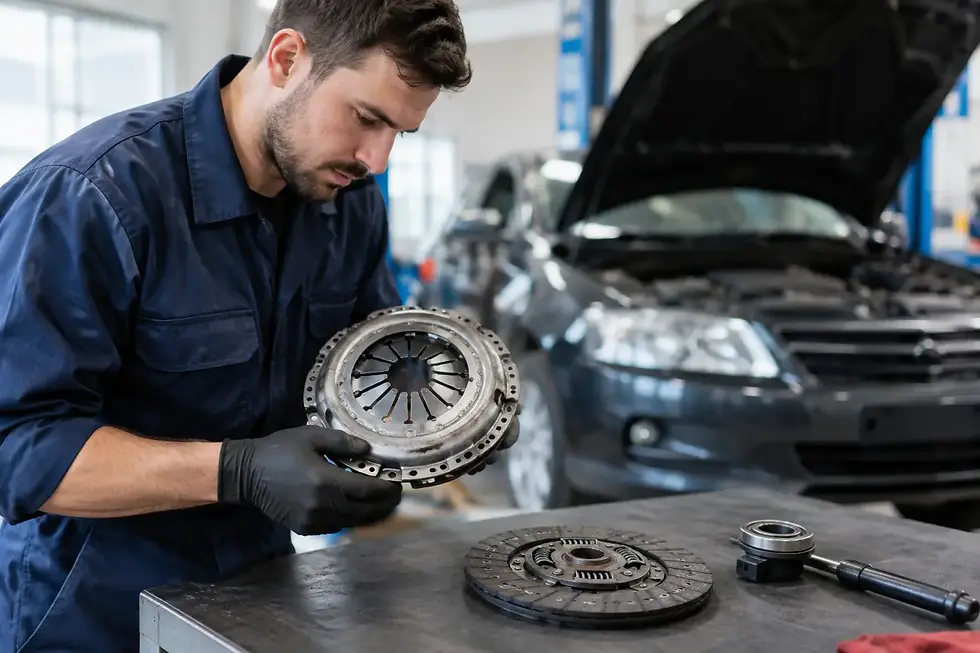
For standard transmissions, the same principle applies. Synchronizer wear, bearings, gears, seals, and clutch-related components are evaluated as part of restoring smooth, dependable operation. The best repair is the one that matches the vehicle's use and corrects the source of the problem.
Valve body and hydraulic control work fine-tunes shifts
The valve body directs transmission fluid through carefully controlled passages. Its valves, channels, springs, pressure-regulating components, and electronic solenoids can have a direct effect on shift quality. Wear or contamination in this area can lead to delayed engagement, flare shifts, harsh changes, or inconsistent operation.
Rebuilders inspect and service hydraulic control components as needed rather than assuming new friction materials alone will correct the issue. This work requires specialized knowledge because small changes in fluid control can make a major difference in how a transmission applies a clutch or moves from one gear to the next.
There is no single calibration that fits every vehicle. The right approach depends on the transmission design, engine and truck configuration, factory specifications, intended use, and any approved updates for that unit. That is why experienced transmission specialists are especially valuable for towing vehicles, heavy-duty applications, and work fleets.
Clean assembly protects the new rebuild
Transmission rebuilding is precision work. Internal components must be assembled in the correct order, measured where required, lubricated properly during assembly, and installed with care. Cleanliness is not cosmetic. Debris left in passages or components can damage a rebuilt unit and compromise shift performance.
A thorough job also addresses fluid contamination. Old friction material or metal particles can remain in a cooler, line, converter, or related component. If contamination returns to the rebuilt transmission, it can create a new failure. Proper cleaning and system preparation help protect the investment made in the rebuild.
Testing confirms the repair before delivery
A rebuilt transmission should not be considered complete simply because it has been reinstalled. Rebuilders verify operation, check for leaks, confirm fluid condition and levels, and evaluate shift performance under appropriate operating conditions. The vehicle may need time to reach operating temperature before final checks can show how it behaves in real driving conditions.
Testing also gives the shop an opportunity to confirm that the repair works with the vehicle's controls and related systems. This final stage is where careful workmanship becomes a result the driver can feel: predictable engagement, controlled shifts, and dependable performance under normal use.
The Trade-Off Between a Quick Fix and a Lasting Repair
Some transmission concerns can be corrected without a complete rebuild. Others have internal damage significant enough that partial repair would not offer the reliability a customer needs. The right answer depends on the inspection, the vehicle's condition, its mileage, how it is used, and the customer's plans for keeping it.
For a commuter, a dependable repair may mean avoiding missed work and stressful roadside problems. For a truck owner, it may mean being able to tow with confidence. For a business, it may mean keeping revenue-producing vehicles on the road instead of parked in the lot. In each case, the value of the repair is not only smoother shifts. It is reduced uncertainty.
Transmission Rebuild Support in Mabank, Texas
Barton's Transmission & Supply LLC has spent 50 years serving drivers throughout the tri-state area with specialized transmission, driveline, transfer case, differential, clutch, and heavy-duty repair work. Located at 1900 S. 3rd Street in Mabank, across from Tractor Supply, the 17,000-square-foot facility includes 14 lifts and a large staff to support efficient turnaround for personal vehicles, work trucks, and fleets.
Customers can bring in concerns involving automatic or standard transmissions, commercial applications, and drivetrain components for professional evaluation. Barton's works with all extended warranty companies and is a preferred vendor for many. Every qualifying rebuild is backed by a long standard 3-year/36,000-mile warranty, with coverage options available up to 3 years/100,000 miles. Financing support and transmission-related parts are also available, and bilingual assistance helps more local drivers get clear answers.
If your vehicle is no longer shifting the way it should, do not wait for a minor concern to become a larger interruption. Bring it to a transmission specialist who can inspect the complete system, explain the repair path plainly, and help get you back on the road with work built to last.


Comments