_edited.jpg)
How the Differential Rebuild Process Works
A differential problem can turn a dependable truck, car, or work vehicle into something you do not trust to drive. Whining on the road, grinding during turns, vibration, leaks, or a hard clunk when changing direction can all point to a driveline concern that deserves professional attention. Understanding how differential rebuild process works helps explain why this repair requires specialized equipment, experienced technicians, and careful setup - not a quick parts swap.
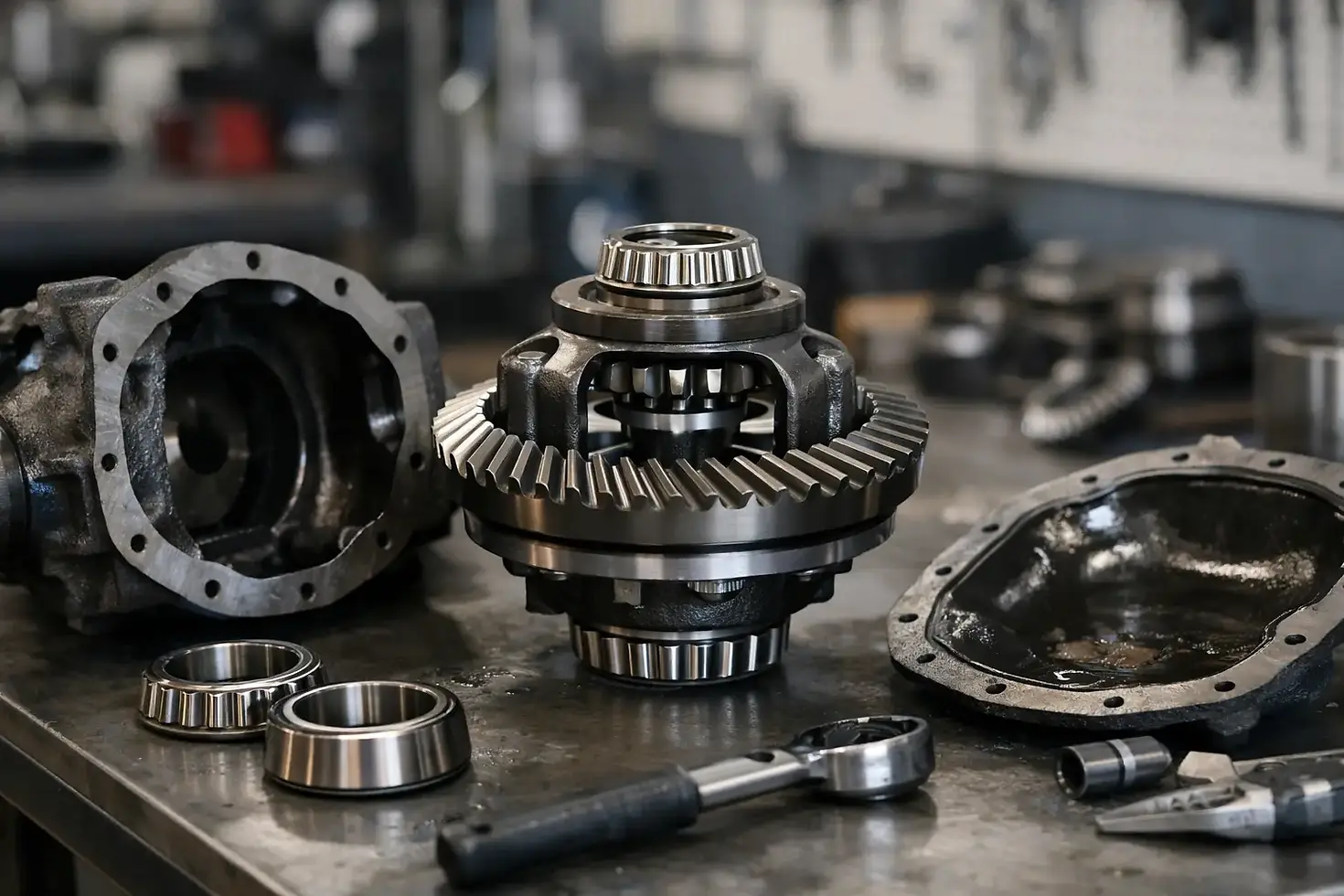
The differential transfers power to the wheels while allowing them to rotate at different speeds through a turn. Inside the housing are precision gears, bearings, seals, and, depending on the vehicle, limited-slip or locking components. When one part wears or fails, metal debris and incorrect gear contact can affect the rest of the assembly. A quality rebuild addresses the complete system so the repair is built to last.
How the Differential Rebuild Process Works
A differential rebuild begins with confirming the source of the concern. Noise from the rear or front of a vehicle is not always caused by the differential itself. Axle bearings, driveshaft components, transfer case issues, wheel-end parts, and transmission-related problems can create similar symptoms. Proper diagnosis matters because replacing the wrong component wastes time and money.
Once the differential is identified as the issue, the unit is removed or opened as needed for a complete inspection. Technicians examine the gear set, bearings, races, seals, axle-related components, carrier, pinion, and the housing itself. The condition of the lubricant also tells part of the story. Burned fluid, water contamination, or metal material in the oil can reveal the extent of internal wear.
At this stage, a rebuild plan is based on what the unit needs, not on a one-size-fits-all package. Some differentials need bearings, seals, and precise adjustment. Others have damaged ring-and-pinion gears, worn limited-slip parts, or housing damage that requires more extensive work. The goal is to restore correct operation and protect the vehicle from another premature failure.
Disassembly reveals the full condition
The differential is carefully disassembled so each reusable and worn component can be evaluated. This is where experience makes a difference. Gear teeth may show wear patterns caused by improper contact, low lubricant, overloaded service, towing demands, or a failed bearing. A damaged bearing can allow a gear to move out of position, creating additional damage that may not be visible until the unit is opened.
Parts that do not meet the needed standard are replaced with quality components suited to the application. For trucks and work vehicles, that can be especially important. Towing, hauling, stop-and-go routes, off-road use, and commercial mileage put added stress on driveline parts. The right repair should account for how the vehicle is actually used, not just its make and model.
Gear setup is the part that cannot be rushed
The ring-and-pinion gear set must be installed and adjusted to exact specifications. Technicians set pinion depth, bearing preload, backlash, and gear-contact pattern. Those measurements determine how the gears carry load and how quietly they operate.
A gear set can look fine from the outside but fail early if it is not set up correctly. Too much or too little preload, an incorrect backlash setting, or a poor tooth-contact pattern can lead to heat, noise, accelerated wear, and repeat repairs. This is why differential work is a specialized geartrain service. The durability of the rebuild depends as much on precision assembly as it does on the quality of the replacement parts.
When applicable, limited-slip components are inspected and rebuilt or replaced so the differential can perform as intended under load and on changing road surfaces. Seals are renewed to help prevent fluid loss, and the housing is checked to make sure the rebuilt assembly has a sound foundation.
Reassembly, testing, and return to service
After setup is complete, the differential is reassembled with the correct lubricant and installed back into the vehicle when removal was required. The driveline is checked as part of the final service because the differential works with connected components, not in isolation. A careful final inspection helps ensure the vehicle is ready to return to normal driving, towing, commuting, or job-site use.
The timeline depends on the vehicle, parts availability, the amount of internal damage, and whether related driveline work is needed. A straightforward bearing-and-seal repair is different from rebuilding a severely damaged unit with a new gear set. Clear communication matters throughout the job so the vehicle owner understands the recommended repair and the reason behind it.
Why a professional differential rebuild is worth it
A differential is built around exact tolerances. Unlike many basic maintenance services, the repair cannot be judged by whether the vehicle simply moves when it leaves the shop. The gears must run correctly under real load and over time. Professional rebuilding reduces the risk of repeat noise, leaks, gear damage, and avoidable downtime.
For drivers across Northeast Texas and the Texas, Oklahoma, and Louisiana tri-state area, that reliability has a practical value. A personal vehicle has to get the family where it needs to go. A truck may be needed for work, towing, or a business route. A fleet vehicle out of service can affect the entire day. Addressing a differential concern with a thorough rebuild can be the better long-term choice when the rest of the vehicle is worth keeping on the road.
It also helps to work with a shop that specializes in geartrain and driveline repair rather than treating the differential as an occasional add-on service. Specialized technicians understand the relationship between transmission, transfer case, driveshaft, axles, and differential components. That broader knowledge helps prevent a narrow repair from overlooking the condition that caused the problem in the first place.
Differential service backed by experience
Barton's Transmission & Supply LLC has served the region for 50 years with specialized transmission, driveline, transfer case, clutch, and differential repair. From its 17,000-square-foot Mabank facility at 1900 S. 3rd Street, across from Tractor Supply, the team has the staff, equipment, and 14 lifts needed to handle passenger vehicles, trucks, heavy-duty applications, and fleet work with efficient turnaround.
Customers can expect a straightforward evaluation, durable rebuild workmanship, and repair options based on the condition of their vehicle. Barton's works with all extended warranty companies and is a preferred vendor for many of them. Rebuild coverage includes a standard 3-year/36,000-mile warranty, with options available up to 3 years/100,000 miles. Financing support and parts availability can also help make a necessary driveline repair more manageable.
If your vehicle has developed driveline noise, vibration, leaking differential fluid, or a change in how it handles under load, do not wait for a small internal problem to become a major gear failure. Bring it in for specialized service and get a repair plan built around getting you back on the road with confidence.


Comments