_edited.jpg)
Transmission Rebuild vs Replacement: Which Is Best?
A transmission problem can put a work truck, family SUV, or daily commuter out of service fast. When the shop recommends major transmission work, the transmission rebuild vs replacement decision usually comes down to the condition of the unit, the vehicle’s needs, available parts, and the level of long-term confidence you want from the repair.
The right answer is not always the cheapest option on the first estimate. It is the option that addresses the actual failure, fits the vehicle, and gives you a dependable path back on the road.
Transmission Rebuild vs Replacement: The Main Difference
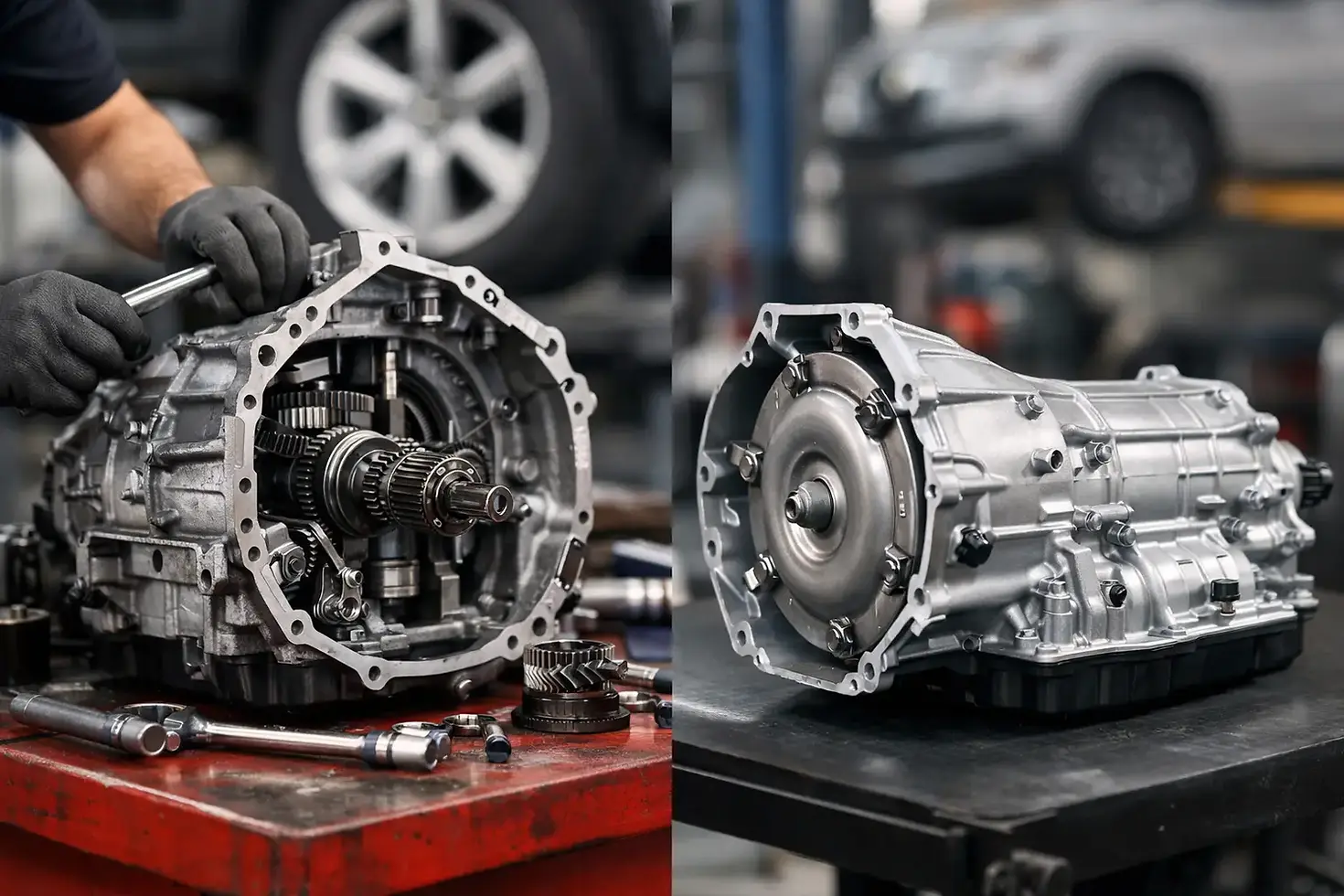
A transmission rebuild starts with removing and fully disassembling your existing transmission. The failed, worn, or damaged internal components are identified and replaced as needed. The unit is cleaned, rebuilt to proper specifications, and reassembled for your vehicle. A quality rebuild is not a quick patch. It is detailed geartrain work performed by technicians who understand how the entire unit works together.
A transmission replacement means installing another transmission in place of the original. That replacement may be a new unit, a remanufactured transmission, or, in some situations, a used unit. The source and quality of that replacement matter just as much as the installation itself.
Both options can be the right repair. The best choice depends on what the inspection shows, how long you plan to keep the vehicle, how it is used, and what is available for that particular make and model.
When a Transmission Rebuild Makes Sense
A rebuild is often a strong choice when the original transmission housing and major hard parts are serviceable, but internal wear or component failure has caused the problem. Because the transmission is opened and evaluated component by component, the repair can be tailored to the specific failure rather than relying on a one-size-fits-all replacement.
This is especially valuable for trucks, commercial vehicles, older vehicles with hard-to-source units, and vehicles that see demanding use. A custom rebuild can address worn internal parts while retaining the correct transmission for the vehicle. It also allows the technician to inspect related components that affect durability, including the torque converter, valve body, seals, clutches, bands, planetary gearsets, and electrical controls where applicable.
A rebuild may also provide better value than a replacement when a new or remanufactured unit is expensive, backordered, or unavailable. For owners who intend to keep a vehicle, a properly rebuilt transmission can be a practical investment in years of dependable service.
That said, rebuild quality depends on the shop doing the work. Transmission rebuilding is specialized work. It requires accurate diagnosis before removal, careful inspection during teardown, quality replacement parts, proper assembly procedures, and testing before the vehicle leaves the facility.
When Replacement Is the Better Option
Replacement can be the better route when the transmission has severe case damage, extensive hard-part failure, or contamination that makes rebuilding less practical. It may also make sense when a high-quality remanufactured unit is readily available and offers a clear warranty advantage for your vehicle.
For some newer vehicles, replacement with a remanufactured transmission can reduce downtime. That matters when your truck supports a business, your vehicle is needed for a daily commute, or a fleet vehicle cannot stay parked for long. A replacement unit may arrive ready to install, although the vehicle still needs proper setup, programming when required, and verification of related systems.
A used transmission is usually the lowest upfront-cost replacement option, but it carries more uncertainty. Its history may be unknown, its wear level may be difficult to verify, and warranty coverage is often limited. For a customer trying to get through a short-term situation, it may be considered. For long-term reliability, it is worth looking beyond the initial price.
Cost Is More Than the First Number on the Estimate
It is natural to compare rebuild and replacement estimates side by side. But the lower number is not always the lower cost over time. A repair that does not fully address the failure can lead to more downtime, more labor, and another major decision sooner than expected.
A rebuild estimate reflects the labor required to remove, disassemble, inspect, clean, rebuild, reinstall, and test the transmission. The final scope can depend on what is found inside the unit. A professional shop should explain the condition of the transmission and what the recommended repair includes.
Replacement pricing depends heavily on the type of unit being installed. A new transmission can carry a premium price. A remanufactured unit may offer a good balance of availability, consistency, and warranty support. A used unit can cost less upfront, but customers should weigh that savings against the risk of installing another unit with unknown internal wear.
The right question is not simply, “Which option costs less?” Ask which option gives your vehicle the best value for the way you use it and the time you expect to own it.
Vehicle Use Should Guide the Decision
A commuter vehicle that sees normal driving has different demands than a diesel pickup pulling equipment, a delivery vehicle making daily stops, or a fleet van carrying tools and inventory. Towing, hauling, frequent stop-and-go driving, heavy loads, and high mileage all affect what a transmission needs to handle.
For working vehicles, durability and turnaround time are often as important as the initial repair cost. If a vehicle earns its keep, every day it is out of service can affect the business. In those cases, the best repair is often the one that provides dependable performance with a clear warranty and a realistic completion timeline.
For an older personal vehicle, the decision may depend on the vehicle’s overall condition and future plans. A rebuild can make excellent sense when the vehicle is otherwise sound and worth keeping. A replacement may be more practical if the correct unit is available quickly and the overall repair plan supports it.
Warranty Coverage Matters
A transmission is one of the most complex and expensive systems on a vehicle. Warranty coverage should be part of the repair conversation, not an afterthought. Read what is covered, how long coverage lasts, and whether there are mileage limits or maintenance requirements.
A solid warranty reflects confidence in the workmanship and components behind the repair. It also gives customers a clearer picture of the value they are receiving. If you have an extended warranty, the repair facility should be prepared to work with the warranty company and help move the process forward.
Why Professional Evaluation Comes First
Transmission symptoms can overlap with problems in other drivetrain and vehicle systems. A vehicle may have a transmission issue, but it could also involve the transfer case, differential, clutch, driveshaft, cooling system, electronic controls, or another related component. Replacing or rebuilding a transmission without a complete professional evaluation can lead to unnecessary expense or leave the original problem unresolved.
The best repair process begins with specialized diagnosis and a straightforward explanation of the findings. From there, you should receive a recommendation based on the actual condition of your vehicle, not a generic answer meant to fit every customer.
Specialized Transmission Service in Mabank
For drivers across Northeast Texas and the surrounding tri-state area, Barton's Transmission & Supply LLC offers specialized transmission, driveline, differential, transfer case, clutch, and commercial vehicle service from its 17,000-square-foot Mabank facility at 1900 S. 3rd Street, across from Tractor Supply. With 50 years in business, 14 lifts, a large staff, fast turnaround capacity, and warranty options including a standard 3-year/36,000-mile warranty with options up to 3-year/100,000-mile coverage, the team can evaluate whether a custom rebuild or replacement is the better fit. The shop works with all extended warranty companies and is a preferred vendor for many, so ask about warranty assistance and available financing options when scheduling service.
If your vehicle is slipping, shifting poorly, losing power through the drivetrain, or showing signs of a major transmission concern, do not wait for the problem to become more costly. Bring it to a specialized transmission shop that can give you a clear recommendation and repair it with the durability your vehicle needs.


Comments