_edited.jpg)
When Should Transfer Case Be Serviced on Your Vehicle?
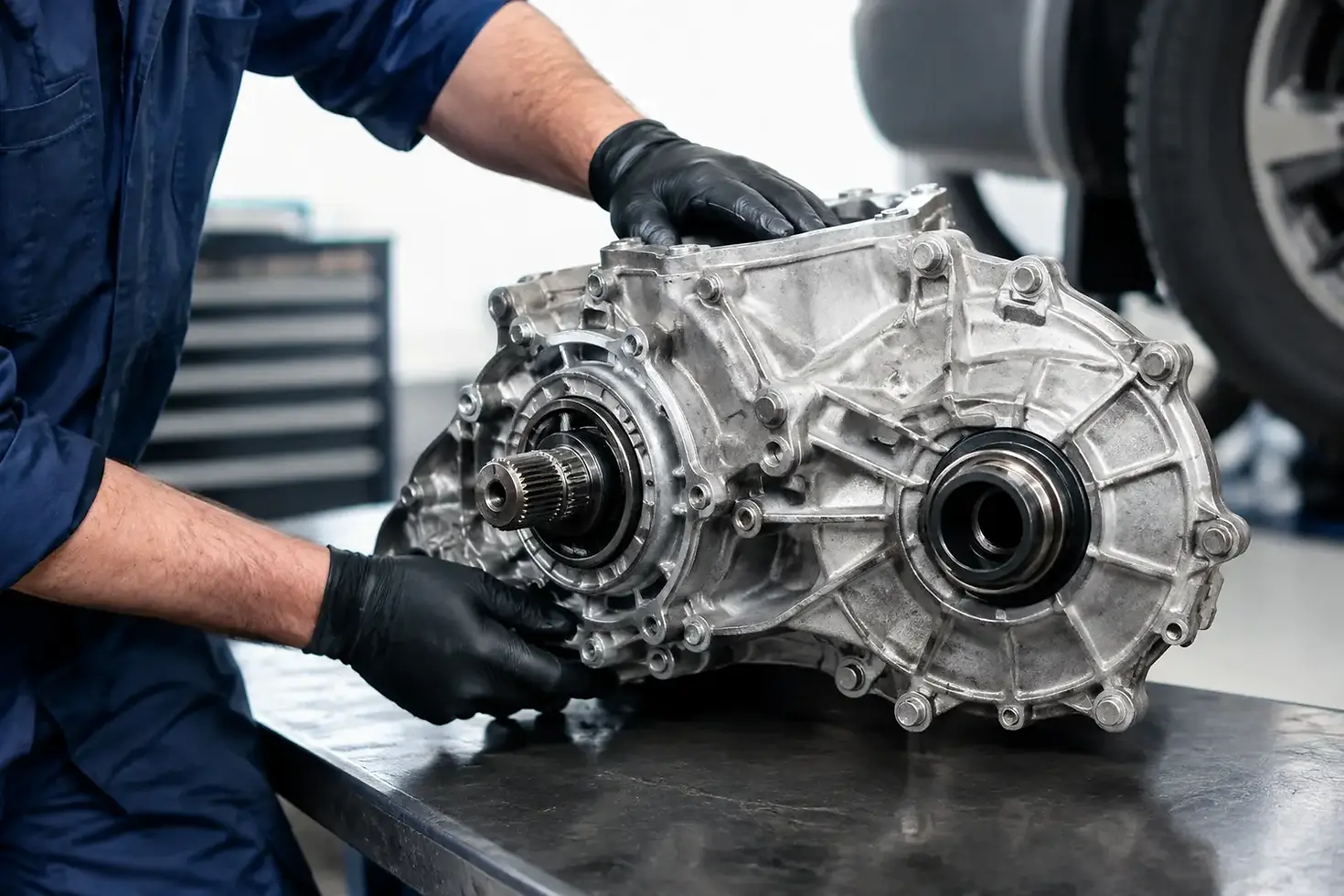
A transfer case rarely gets much attention until a four-wheel-drive or all-wheel-drive vehicle starts making noise, hesitating to engage, or leaving the driver without the traction they expected. So, when should transfer case be serviced? The short answer is before the fluid breaks down and wear turns into an expensive internal repair. For many trucks, SUVs, and AWD vehicles, that means following the manufacturer’s service interval and bringing the vehicle in sooner if there are driveline concerns.
The transfer case is a working part of the driveline, not an accessory. It sends power where the vehicle needs it, whether that means all four wheels in 4WD or both axles in an AWD system. Clean, correctly specified fluid helps protect the chains, gears, bearings, clutches, and other internal components that make that possible.
When Should Transfer Case Be Serviced?
There is no single mileage number that fits every vehicle. Service recommendations vary by make, model, transfer case design, drivetrain, and how the vehicle is used. A lightly driven SUV that spends most of its time on paved roads may have a different schedule than a work truck that tows, hauls equipment, travels rough roads, or regularly uses four-wheel drive.
A practical rule is to have transfer case service reviewed at the vehicle manufacturer’s recommended interval, commonly somewhere between 30,000 and 60,000 miles. Some newer vehicles may list longer intervals, while severe-use driving can call for earlier attention. The owner’s manual is the starting point, but real working conditions matter just as much.
In East Texas, many trucks and SUVs see more than normal commuter use. Towing a boat, pulling a trailer, working on ranch property, driving muddy access roads, or making frequent trips across Texas, Oklahoma, and Louisiana all place added heat and load on driveline components. In those situations, waiting for the longest possible interval may not be the best value.
Transfer case service generally involves removing the old lubricant and installing the exact fluid specified for that unit. That detail matters. Modern transfer cases can require particular fluid types, and using the wrong product can affect engagement, lubrication, and long-term component life. A specialized driveline shop can identify the correct application and inspect the system for concerns that are not apparent during ordinary oil-change service.
Service It Before Warning Signs Become Repairs
A scheduled transfer case service is usually straightforward. Repairing a damaged transfer case can be much more involved because the unit may need to be removed, disassembled, and rebuilt or replaced. That is why a vehicle should be inspected promptly when its operation changes.
Pay attention if four-wheel drive or AWD engagement is delayed, inconsistent, or unavailable. New grinding, whining, clunking, or rattling sounds from under the vehicle also deserve professional attention, especially when they happen during turns, acceleration, deceleration, or when changing drive modes. A fluid leak around the transfer case, vibration through the floor, or a warning message related to the drivetrain should not be ignored.
Those symptoms do not automatically mean the transfer case has failed. The driveshafts, differentials, transmission, electronic controls, wheel-speed information, and related driveline parts can produce similar concerns. That is exactly why guessing is costly. Proper geartrain diagnosis identifies where the problem is coming from before repair work begins.
Towing and Work Use Change the Schedule
For truck owners, towing is one of the biggest reasons to stay ahead of transfer case maintenance. Pulling a loaded trailer adds heat and force throughout the driveline. The transfer case may not get the same attention as the engine or transmission, but it is still handling power under load.
Fleet vehicles deserve the same approach. A truck that is needed for deliveries, job sites, service calls, or daily operations cannot afford extended downtime from a driveline failure. Planned maintenance makes it easier to schedule service around the workday instead of reacting after a breakdown.
Regular off-road use, deep water exposure, frequent four-wheel-drive operation, and repeated stop-and-go hauling are also reasons to ask for a more conservative service schedule. The right interval is based on the vehicle and how it earns its keep.
Why Transfer Case Fluid Condition Matters
Over time, transfer case fluid can lose the qualities that protect internal components. Heat, friction, age, and contamination can reduce its ability to lubricate and carry heat away. As protection drops, metal parts can wear faster and engagement components may not operate as intended.
This is especially relevant in transfer cases that use clutch packs or electronically controlled engagement systems. These units can be sensitive to fluid condition and specification. Service is not simply about putting fresh fluid in a housing. It is about protecting a precision mechanical system that works alongside the transmission, driveshafts, and axles.
A vehicle that has missed maintenance is not necessarily headed for a major repair. However, delaying service after the interval has passed gives wear more time to develop. Bringing it to a driveline specialist early provides a better opportunity to address maintenance needs before they become a rebuild conversation.
What to Expect From a Professional Transfer Case Inspection
When you bring in a vehicle for transfer case service, the goal should be more than a quick fluid exchange. A qualified technician should consider the vehicle’s mileage, use, service history, fluid condition, leaks, and any drivability concerns the owner has noticed. If there is a noise or engagement issue, the transfer case should be evaluated as part of the complete driveline rather than treated as an isolated part.
That matters because transfer case problems can overlap with transmission and differential concerns. A shop that specializes in geartrain systems has the experience to look at the full picture. It helps avoid replacing parts based on assumptions and gives you a clearer path forward when repair is needed.
For vehicles that do require internal work, rebuild quality makes a difference. Correct parts, careful assembly, and a proper evaluation of related driveline components can help prevent repeat problems. A fast repair is useful, but a durable repair is what keeps a truck, SUV, or work vehicle dependable after it leaves the shop.
Transfer Case Service in Mabank, Texas
Barton's Transmission & Supply LLC has spent 50 years serving drivers across the Texas, Oklahoma, and Louisiana tri-state area with specialized transmission and driveline work. Located at 1900 S. 3rd Street in Mabank, across from Tractor Supply, Barton's operates from a 17,000-square-foot facility with 14 lifts and a large staff focused on getting vehicles back on the road quickly.
Whether your vehicle is due for scheduled transfer case maintenance or has a driveline concern that needs professional attention, the team can evaluate the system and explain the recommended next step clearly. Barton's handles transfer case repair, differential service, custom transmission rebuilds, standard and heavy-duty applications, fleet geartrain work, and parts support. The shop works with all extended warranty companies and is a preferred vendor for many of them.
For added confidence, Barton's offers a standard 3-year/36,000-mile warranty on qualifying work, with warranty options up to 3 years/100,000 miles. Ask about current service availability and financing support when scheduling. A timely transfer case service may be one of the simplest ways to protect the drivetrain your vehicle depends on every day.


Comments